Overview
Paramedics have been transitioning into enhanced and advanced practice roles within General Practice for several years. Increased pressure and demand on primary care services have been a catalyst for more opportunities for Paramedics to work in this environment.
Within Norfolk and Suffolk, Paramedics are an already established workforce in General Practice and are increasingly supporting PCN’s to change their care models to best treat their patients. The models are varied, but mainly include carrying out home visits and seeing acutely unwell patients.
“Paramedics have so many complementary skills and in primary care there are many areas where paramedics can compliment the rest of the primary care team, not least acute care, but also, domiciliary visiting and follow up the same day that may well enable patients to stay in their own homes rather than being sent to hospital…”
Professor Simon Gregory, Health Education England
Scope of Practice
Role Responsibilities:
Where a PCN employs or engages a Paramedic under the Additional Roles Reimbursement Scheme, the PCN must ensure that the paramedic:
- Is educated to degree/diploma level in Paramedicine or equivalent experience,
- Is a registered Paramedic with the HCPC,
- Has completed their two-year ‘Consolidation of Learning’ period as a “newly qualified paramedic”,
- Has a further three years’ experience as a band 6 (or equivalent) paramedic,
- Is working towards developing masters level or equivalent capability in paramedic areas of practice and, within six months of the commencement of reimbursement for that individual (or a longer time period as agreed with the commissioner), has completed and been signed off formally within the clinical pillar competencies of the paramedic FCP/AP roadmap to practice,
- Works as part of a MDT within the PCN,
- Assess and triage patients, including same day triage, and as appropriate provide definitive treatment (including prescribing medications following policy, patient group directives, NICE (national) and local clinical guidelines and local care pathways) or make necessary referrals to other members of the primary care team,
- Advise patients on general healthcare and promote self-management where appropriate, including signposting patients to the PCN’s social prescribing service, and where appropriate, other community or voluntary services.
A Paramedic must be able to:
- Perform investigatory procedures as required,
- Undertake the collection of pathological specimens including intravenous blood samples, swabs, and other samples within their scope of practice, and within line of local and national guidance,
- Support the delivery of ‘anticipatory care plans’ and lead certain community services (e.g. monitoring blood pressure and diabetes risk of patients living in sheltered housing),
- Provide an alternative model to urgent and same day GP home visit for the network and clinical audits,
- Communicate at all levels across organisations ensuring that an effective, person-centred service is delivered,
- Communicate proactively and effectively with all colleagues across the multi-disciplinary team, attending and contributing to meetings as required,
- Maintain accurate and contemporaneous health records appropriate to the consultation, ensuring accurate completion of all necessary documentation associated with patient health care and registration with the practice,
- Communicate effectively with patients, and where appropriate family members and their carers, where applicable, complex and sensitive information regarding their physical health needs, results, findings, and treatment choices.
Entry Requirements
- To have successfully completed an approved qualification in paramedic science – The College of Paramedics (CoP) states that, from 2021 onward, all paramedics should have a BSc (Hons).
- Must be registered with the Health and Care Professions Council (HCPC).
- Five years post registration
Training and development
Standard Training (on entry to primary care)
If a paramedic is employed under ARRS, they will need to complete stage 1 & 2 of the First Contact Practitioner (FCP) Roadmap as outlined by NHS England (NHSE), within the first 12-18 months of commencing the role.
First Contact Practitioner Recognition
For paramedics employed under the Additional Roles Reimbursement Scheme (ARRS), NHS England requires practitioners to work towards the knowledge, skills and capabilities required for First Contact Practitioner (FCP) practice through the NHS England Paramedic FCP Roadmap. The roadmap provides a nationally recognised development pathway for paramedics working in primary care and supports progression towards advanced level practice.
The FCP Roadmap
The NHS England Paramedic FCP Roadmap sets out the knowledge, skills and attributes required to safely assess and manage undifferentiated and undiagnosed presentations within primary care. The roadmap consists of two stages:
Stage 1
- Demonstration of the required knowledge, skills and attributes (KSAs) at Level 7.
- This may be achieved through recognised taught learning, supported portfolio routes or a combination of both.
Stage 2
- Application of these capabilities within primary care practice.
- Supported through workplace supervision, portfolio development and workplace-based assessment.
- Includes reflective practice, patient feedback and evidence of capability within the clinical role.
Successful completion of both stages provides recognised FCP capability and demonstrates that the practitioner is working at the required standard for First Contact Practice in primary care.
Education Providers
A number of higher education institutions offer programmes and modules aligned to the FCP Paramedic Roadmap. The availability, content and funding arrangements for these programmes may change over time, therefore prospective learners are advised to contact providers directly for the latest information.
Current NHS England funded providers include:
- Health Sciences University (formally known as AECC)
- University of Central Lancashire (UCLan)
- Coventry University
- University of Cumbria
- University of Hertfordshire
- Teesside University
The above HEIs have also been formally recognised as delivering education and training in line with the relevant Roadmaps to Practice through the Provider Self-Declaration process. However, NHS England does not have funded places with these providers available.
- St George’s University, London
- University of Greenwich – Paramedics
Additional Training and Career Development
As paramedics progress in their careers, they may choose to undertake additional education and training to further develop their scope of practice within primary care. This may include development through First Contact Practitioner (FCP), Advanced Practice and other specialist pathways.
Advanced Practice
For paramedics wishing to progress beyond First Contact Practitioner level, NHS England provides a recognised route to Advanced Practice. Advanced Practitioners work with a high degree of autonomy and demonstrate capability across the four pillars of advanced practice: clinical practice, leadership and management, education, and research. For information on Advanced Practice pathways, education requirements, supervision and available funding opportunities, please visit the Training Hubs Advanced Practice page
Supervision requirements
Effective supervision is essential to support safe practice, professional development and high-quality patient care. Paramedics working within primary care should have access to appropriate supervision arrangements that support both their clinical practice and ongoing learning.
Supervision may take a number of forms:
- Practice supervision – day-to-day support from an experienced clinician for issues arising during clinical practice.
- Clinical or professional supervision – regular structured support to promote professional development, clinical decision-making and reflective practice.
- Educational supervision – support for learners undertaking formal education programmes, FCP Roadmap development or Advanced Practice training.
Paramedics should have access to a named supervisor and appropriate support within their practice, PCN or organisation. This may be a senior paramedic, GP or another suitably experienced healthcare professional, depending on the individual’s role, learning needs and scope of practice.
As a minimum, regular supervision should be scheduled throughout employment. For those undertaking the First Contact Practitioner (FCP) Roadmap or Advanced Practice training, additional supervision, reflection and workplace-based learning opportunities should be incorporated into their development plan.
First Contact Practitioner (FCP) Supervision
Practitioners undertaking the NHS England Paramedic FCP Roadmap require appropriate workplace supervision to support the development and assessment of the knowledge, skills and attributes required for FCP practice.
Practice-based supervisors play an important role in supporting learners through the roadmap process, including:
- Supporting portfolio development.
- Facilitating workplace-based learning and assessment.
- Providing feedback and reflective opportunities.
- Confirming evidence of capability within clinical practice.
- Working with education providers as part of quality assurance and verification processes where applicable.
Further information can be found in the following NHS England resources:
- NHS England Supervision Guidance for Primary Care Network Multidisciplinary Teams
- NHS England First Contact Practitioner Roadmaps
- NHS Learning Hub – First Contact Practitioner (Paramedic) Roadmap
Please note that NHS England continues to update FCP and Advanced Practice guidance. Employers, supervisors and practitioners should refer to the latest national guidance when establishing supervision arrangements.
ARRS Funding
Where eligible, reimbursement for Paramedic roles is available through the Additional Roles Reimbursement Scheme (ARRS) in line with current NHS England guidance and the Network Contract Directed Enhanced Service (DES).
Please note that ARRS eligibility criteria, reimbursement arrangements and role requirements may change. Employers should always refer to the latest NHS England guidance.
Training and Development Funding
Paramedics may be eligible for NHS England funded education and training opportunities, including First Contact Practitioner and Advanced Practice development. Availability of funding varies and is subject to national and regional commissioning arrangements.
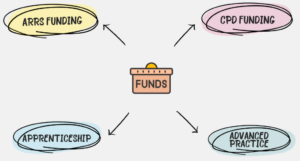
For current funding opportunities, please contact the Training Hub.
Recruitment and Workforce Information
Primary Care Networks (PCNs) employing or engaging a Paramedic through the Additional Roles Reimbursement Scheme (ARRS) should ensure the individual meets the current NHS England eligibility and role requirements for the role. NHS England » Network Contract Directed Enhanced Service (DES).
See more information in above ‘Funding section’.
Recruitment Resources
The resources within this section are intended to support the recruitment, onboarding and integration of Paramedics within primary care and multidisciplinary teams.
Paramedic Job description example (NHSE)
Additional resources
Professional resources
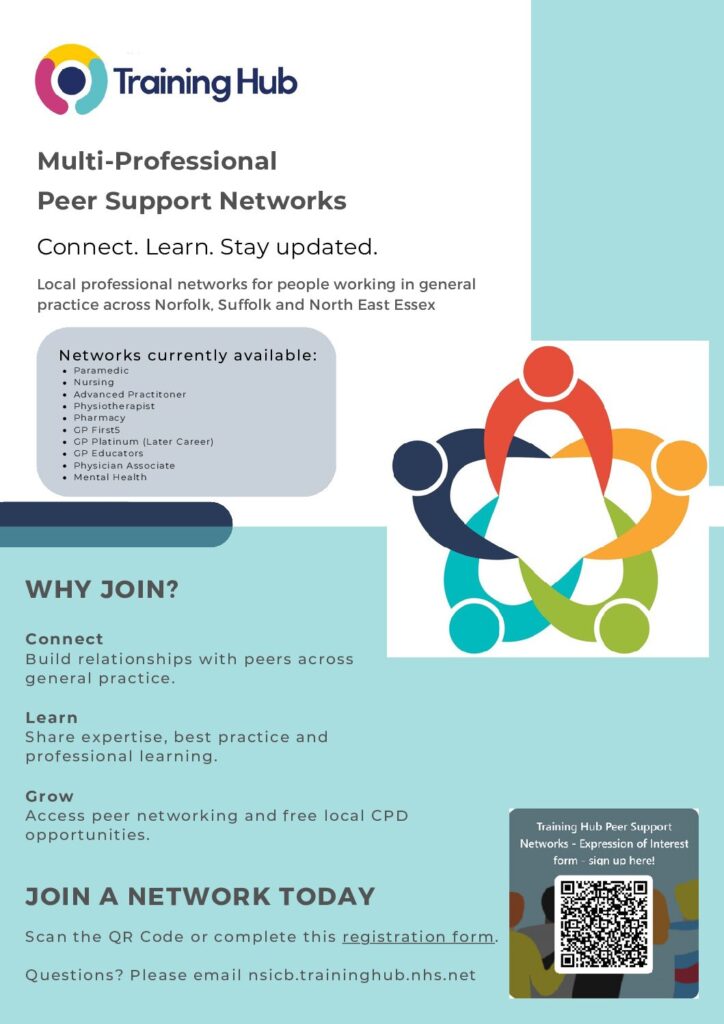
Paramedic Peer Support Group Network
A local support network for paramedics working in general practice.
To join this network please complete this form